The United States' "Train of the Future"
Rarely will you find a railcar that has operated on multiple urban mass transit systems. That's because, well, you can't simply take a CTA train from the Addison Red Line station to New York City.
Pictured is SOAC-1 and SOAC-2 of the U.S. Department of Transportation's State of the Art Car program, which did just that (in a sense).
In the 1970s, urban transportation was, shall we say, uncomfortable and a little bit ugly. The U.S. aimed to design a train that could serve as a state-of-the-art "standard" subway car that could be manufactured to cheaply modernize transit systems across the nation. Each car cost $300,000 to produce—roughly $2.3 million today (real "cheap," huh?!).
After testing in Colorado, SOAC began revenue service on the New York City Subway in 1974, followed by Boston's MBTA later that year. In 1975, the SOAC ran on the CTA's Yellow Line for about two weeks. Chicago's rolling stock was slightly narrow than other cities', so the platform edges at Howard and Skokie had to be modified with a retractable edge to allow passengers to board the train. Next stop: Philadelphia. The plan was nine months of revenue service, but due to liability insurance delays and various issues, SOAC operated intermittently for just 23 days, ceasing service on January 24, 1977.
Roughly 312,000 passengers got the chance to ride it in total. Passengers appreciated the quiet ride and air conditioning, while operators found it easy to control. However, the agencies had more mixed reactions. Various electrical concepts introduced by the SOAC are still used on trains today.
The cars were acquired by the Seashore Trolley Museum in Kennebunkport, Maine, where they have been on static display since 1989.
Pictured is SOAC-1 and SOAC-2 of the U.S. Department of Transportation's State of the Art Car program, which did just that (in a sense).
In the 1970s, urban transportation was, shall we say, uncomfortable and a little bit ugly. The U.S. aimed to design a train that could serve as a state-of-the-art "standard" subway car that could be manufactured to cheaply modernize transit systems across the nation. Each car cost $300,000 to produce—roughly $2.3 million today (real "cheap," huh?!).
After testing in Colorado, SOAC began revenue service on the New York City Subway in 1974, followed by Boston's MBTA later that year. In 1975, the SOAC ran on the CTA's Yellow Line for about two weeks. Chicago's rolling stock was slightly narrow than other cities', so the platform edges at Howard and Skokie had to be modified with a retractable edge to allow passengers to board the train. Next stop: Philadelphia. The plan was nine months of revenue service, but due to liability insurance delays and various issues, SOAC operated intermittently for just 23 days, ceasing service on January 24, 1977.
Roughly 312,000 passengers got the chance to ride it in total. Passengers appreciated the quiet ride and air conditioning, while operators found it easy to control. However, the agencies had more mixed reactions. Various electrical concepts introduced by the SOAC are still used on trains today.
The cars were acquired by the Seashore Trolley Museum in Kennebunkport, Maine, where they have been on static display since 1989.
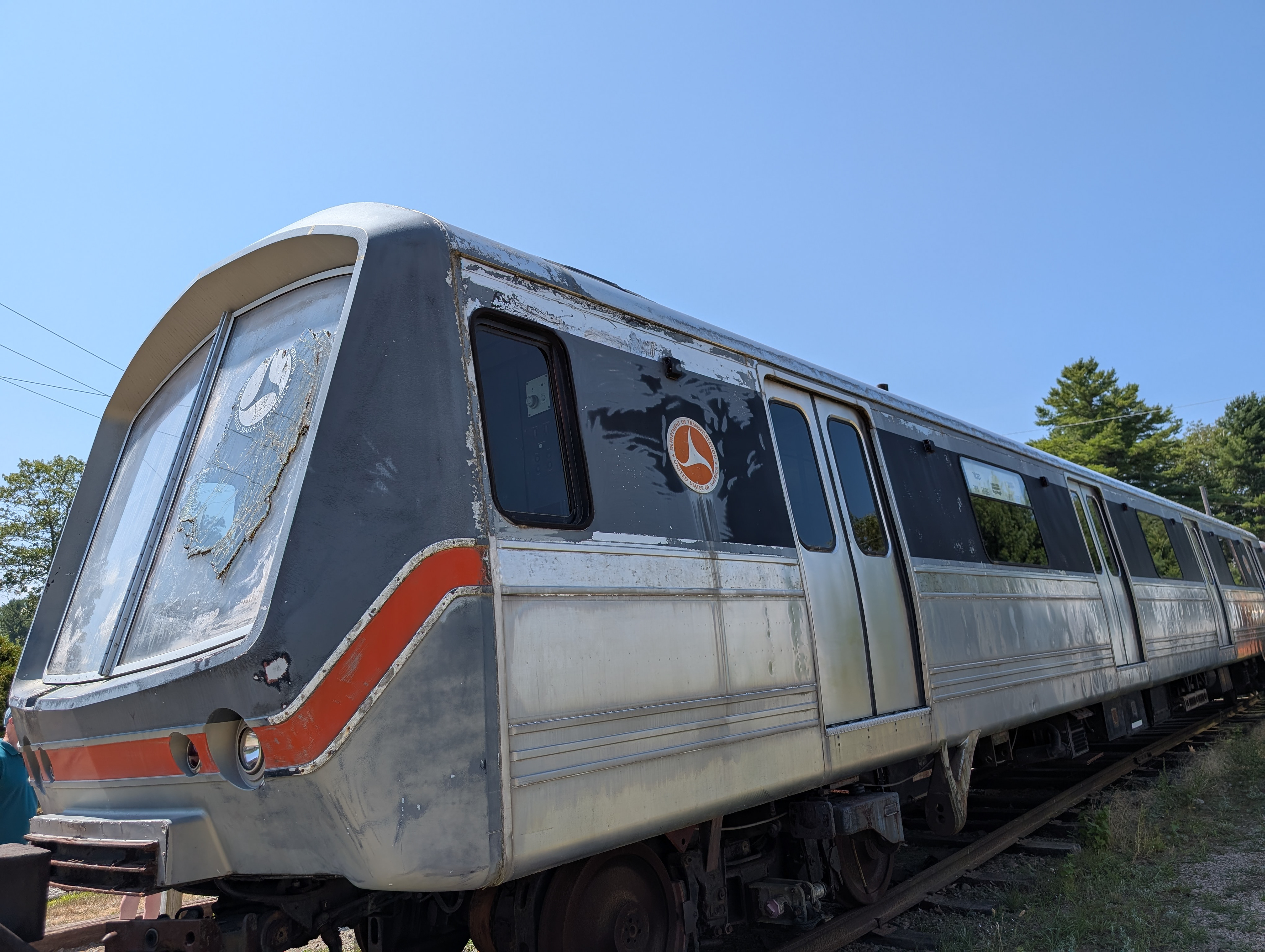
Three-quarter view of SOAC-1
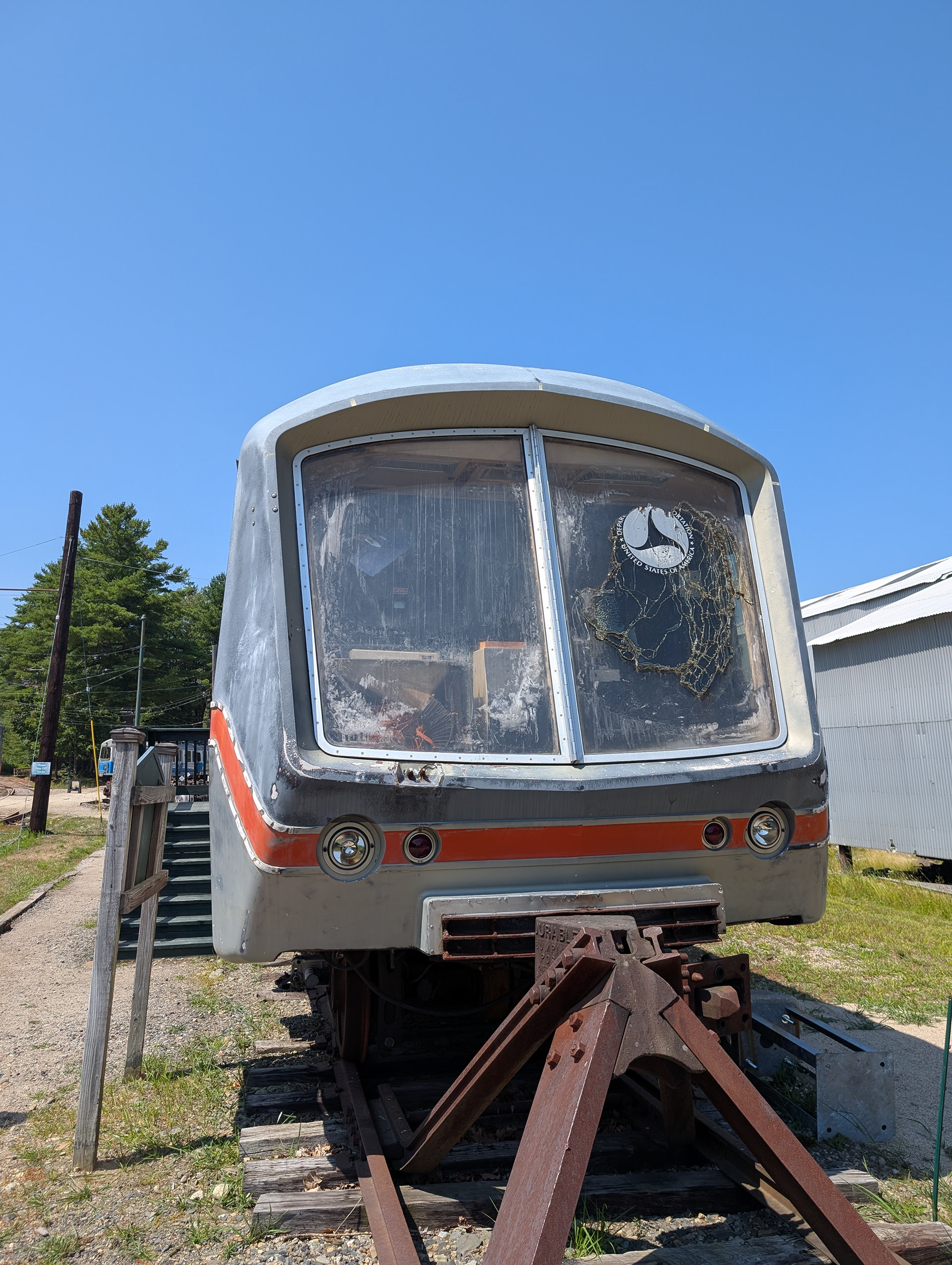
Front view of SOAC-1
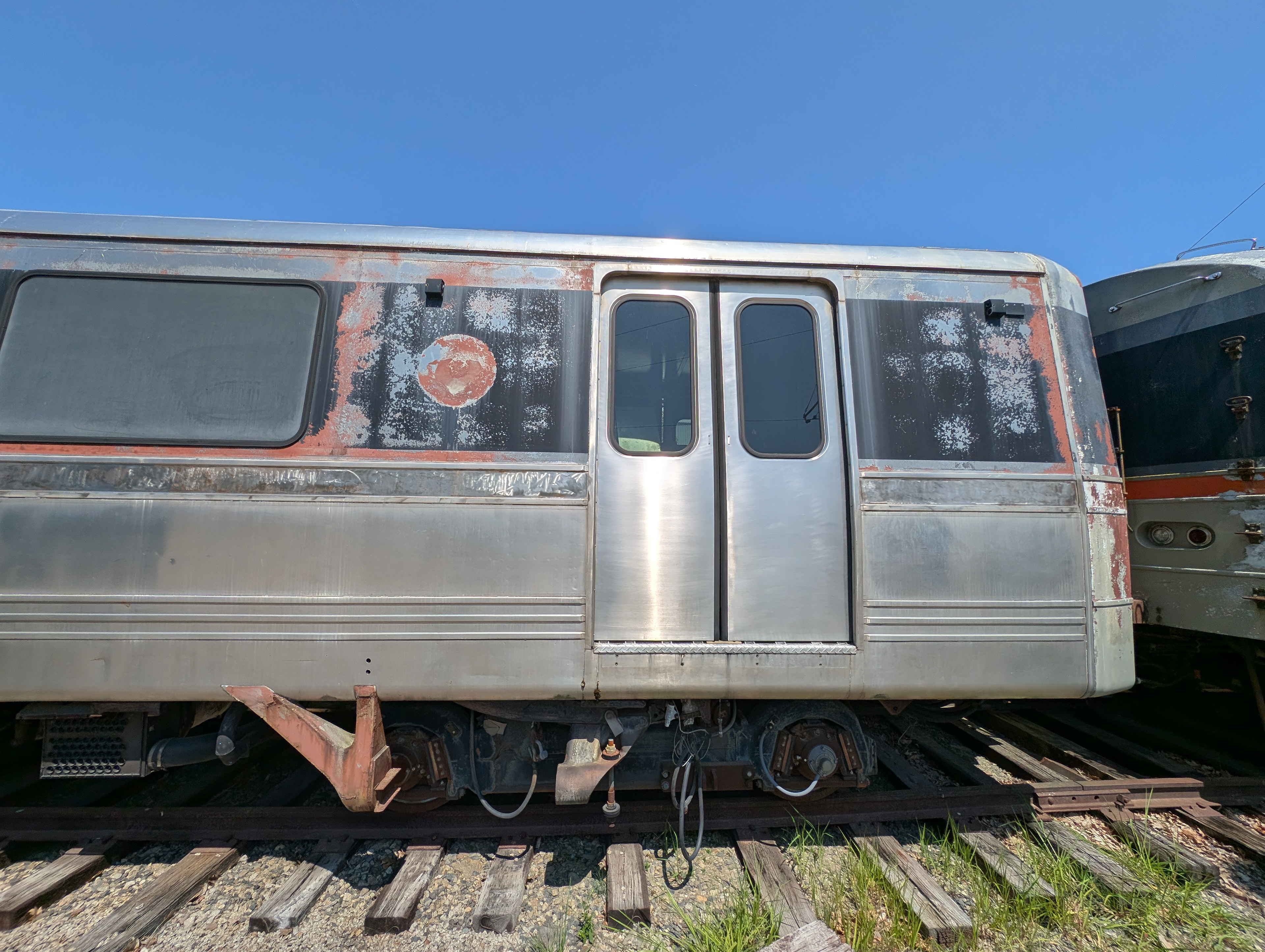
Side view of SOAC-2
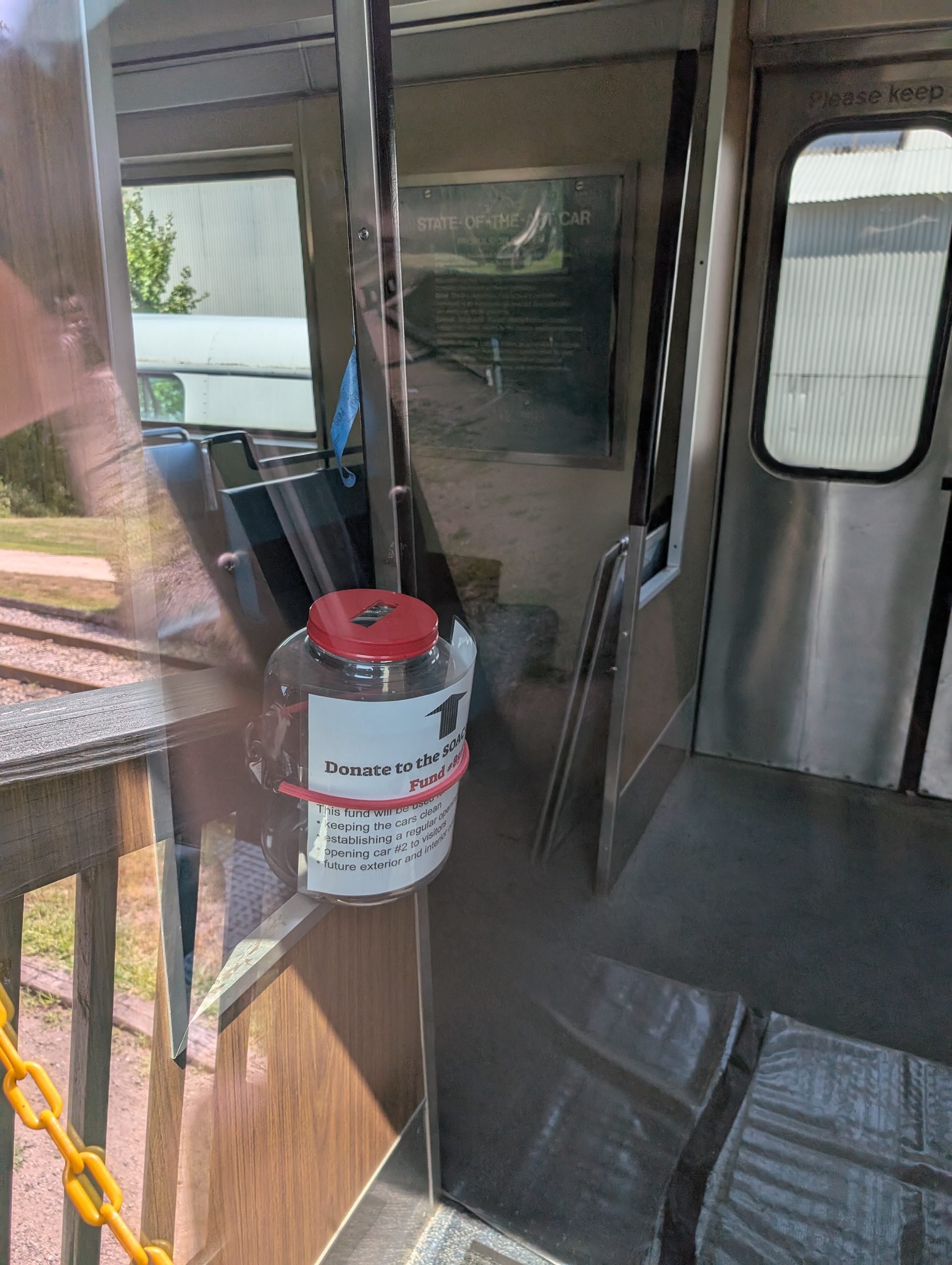
The visible interior of SOAC-1
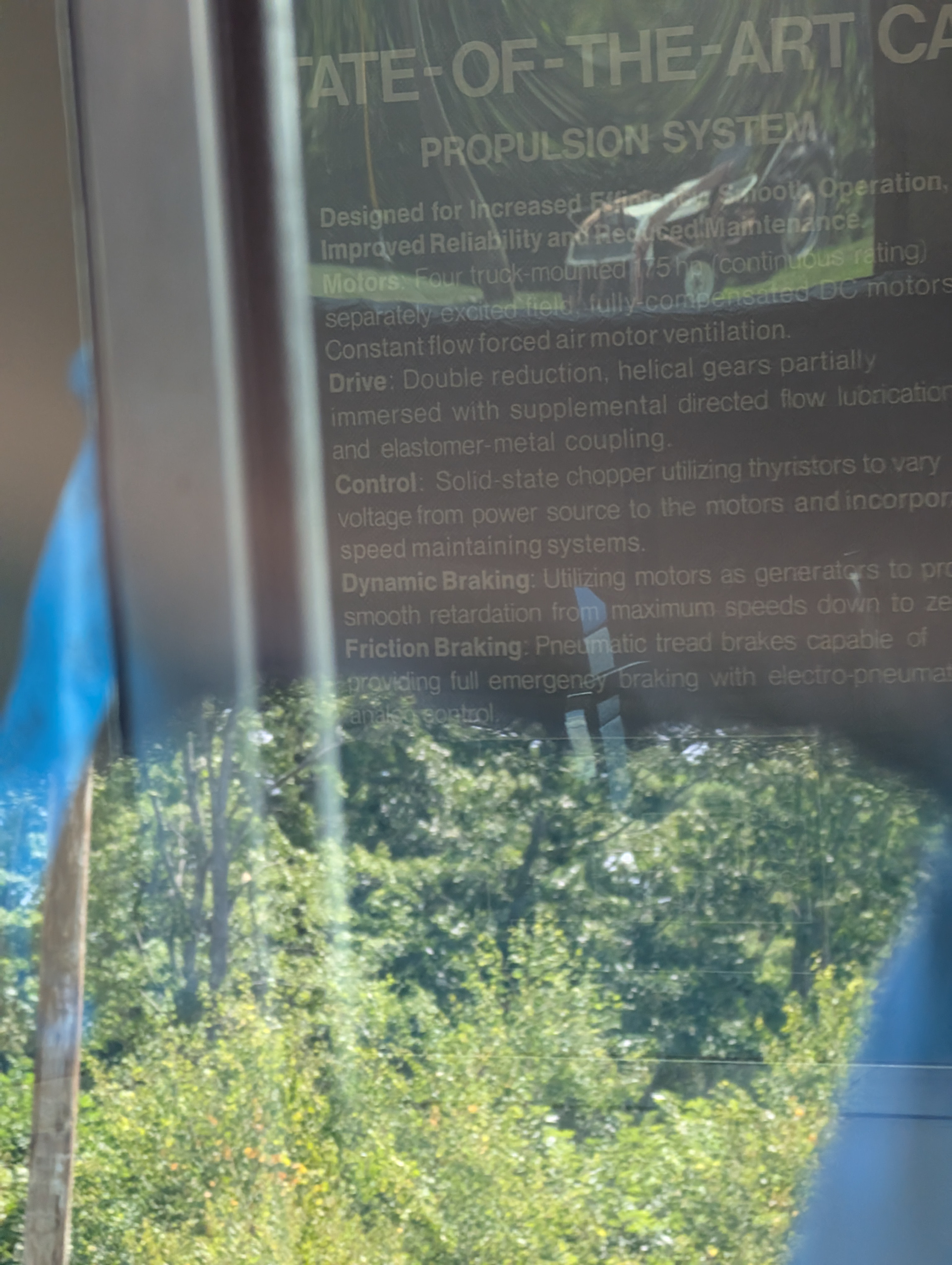
Detail of promotional signage in SOAC-1
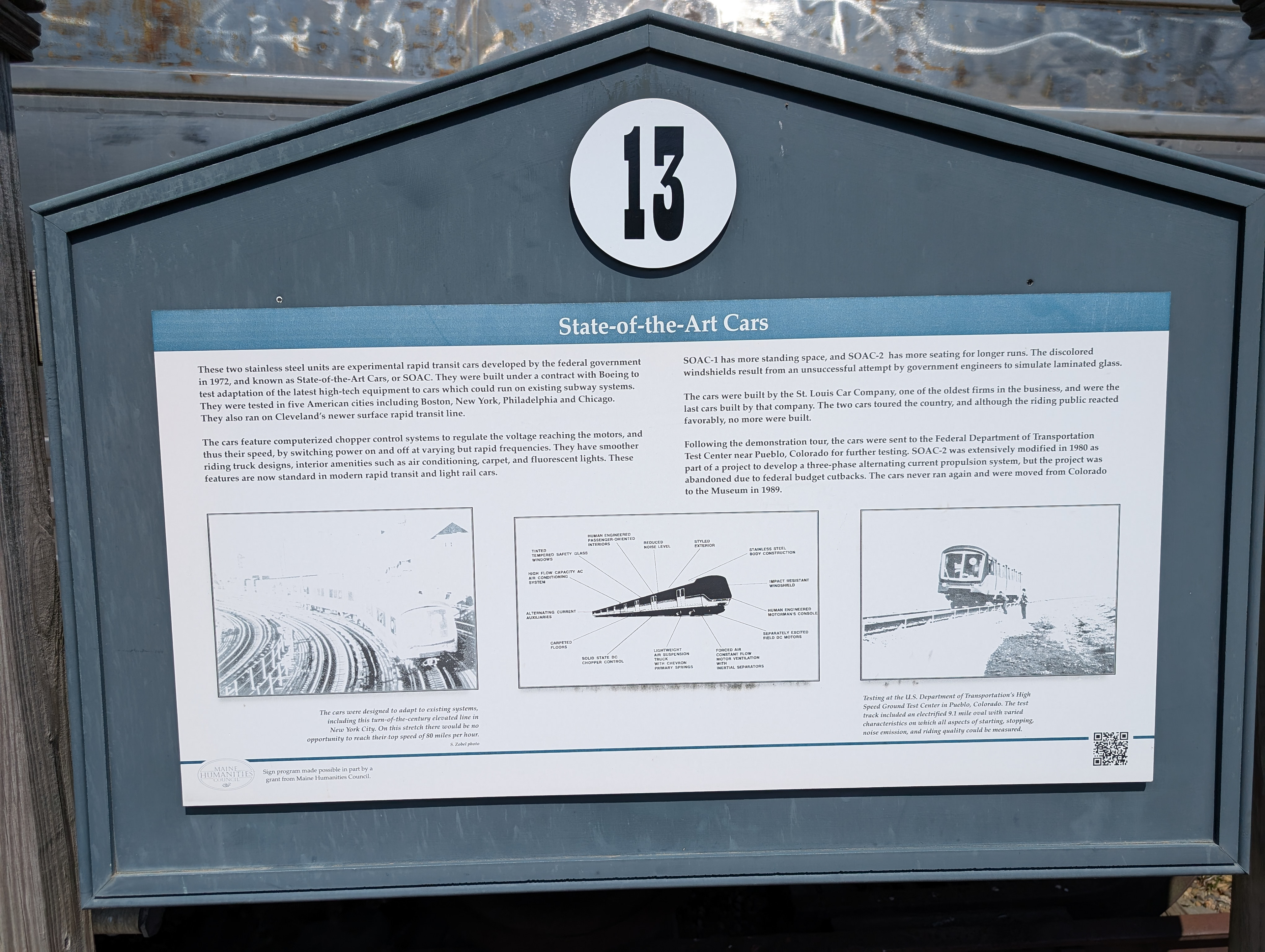
Museum Placard at Seashore Trolley Museum
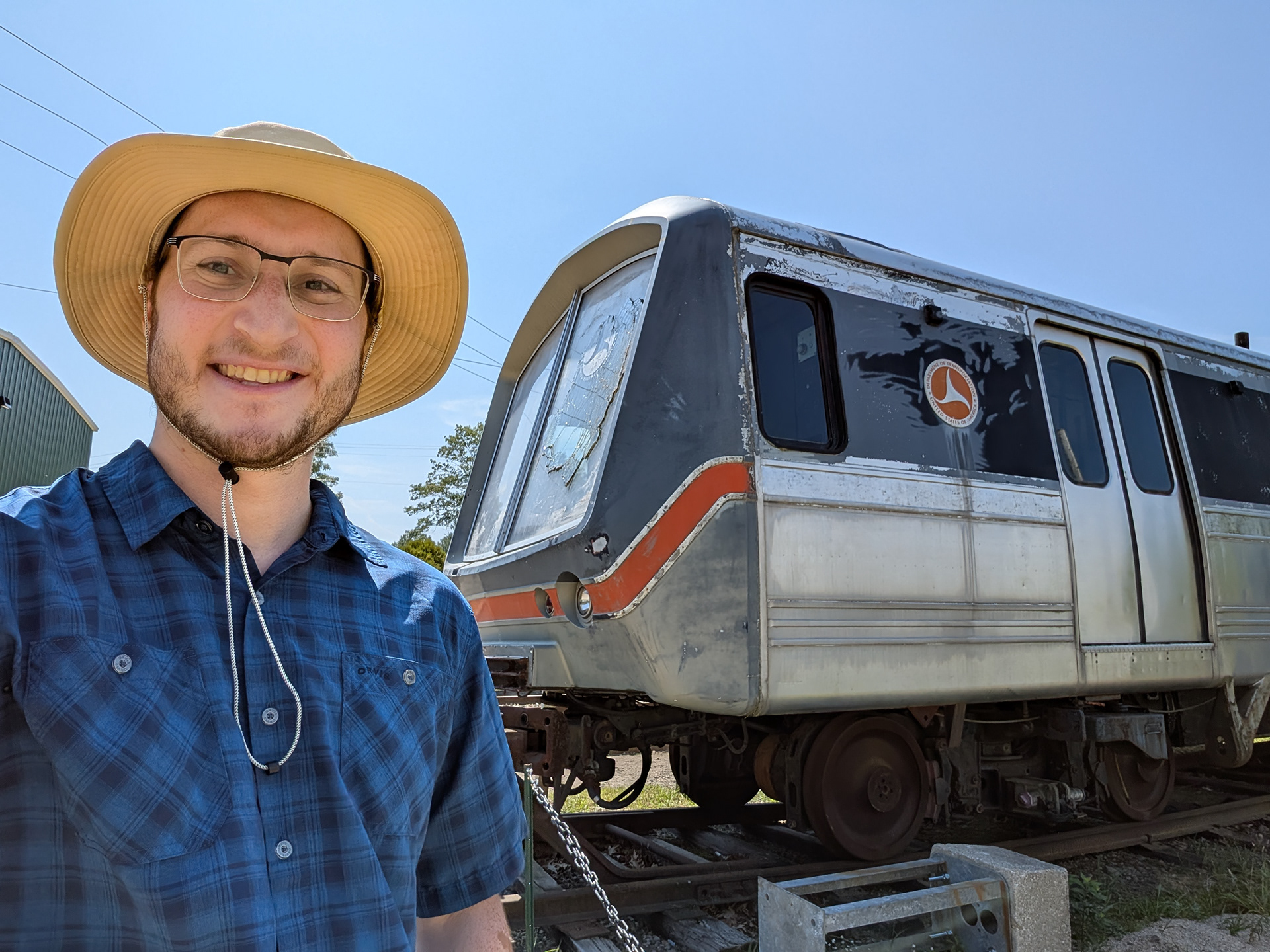
Let me take a selfie!